
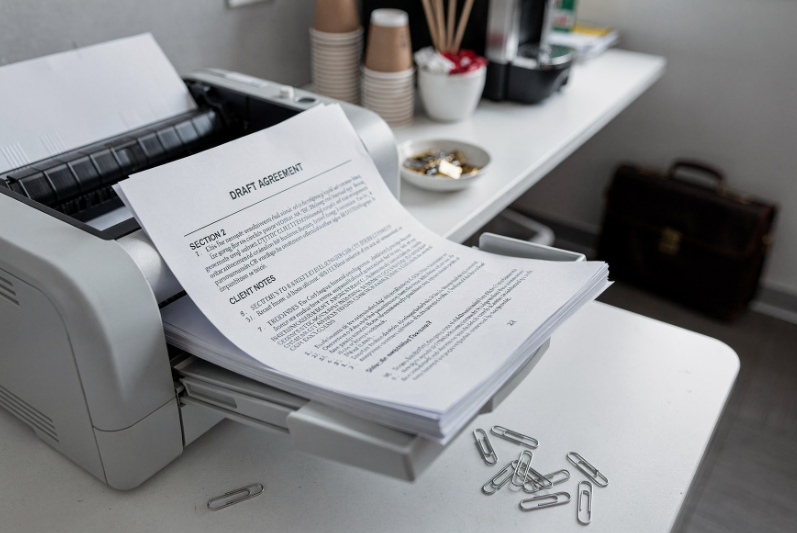
You write a sharp argument. The law is on your side. The facts line up. But the reader hits a wall of long sentences, buried conclusions, and inconsistent terms, and the point loses force before it lands.
That is the problem with weak legal writing. It is not a style complaint. It quietly eats partner time, frustrates clients, softens your persuasion, and drags down profitability.
This post breaks down where those costs hide and how your firm can cut them without slowing anyone down.
What Is The Hidden Cost of Poor Legal Writing at Your Firm?
The hidden cost of poor legal writing at your firm is the combined loss of time, money, credibility, and client trust caused by unclear, inefficient, or inconsistent legal documents. These costs rarely show up on a single line item. They spread across matters, practice groups, and review cycles, so no one sees the full total.
The pieces add up fast: extra revision rounds, write-offs, delayed filings, weaker advocacy, confused clients, and reputational risk. Because each cost is small in isolation, firms treat writing as an afterthought. But we frame it differently. As our whitepaper puts it, legal writing is more than a skill, it is a strategic business asset.
Lost time across every draft
Small writing problems multiply. One vague sentence becomes a comment, then a rewrite, then a re-review. Repeat that across a brief and you have hours gone.
Formatting fixes, citation cleanups, and partner-level reworking of associate drafts all pile on. None of it advances the legal analysis.
Reduced profitability through write-offs
Weak first drafts hit your realization rate directly. Clients increasingly refuse to pay for the learning curves of junior attorneys, so firms discount the time.
Thomson Reuters found that correcting or revising an associate's work was the single largest write-down category, at 53.1 hours costing $32,710 per partner. That is margin lost to fixable drafting problems.
Lower confidence in the final work product
Unclear writing makes strong analysis look weak. When recommendations are buried and the tone shifts page to page, readers hesitate. They wonder whether the reasoning is as solid as it should be.
That doubt shows up inside the firm and in front of clients and courts.
How Does Poor Legal Writing Drain Billable Time?
Poor legal writing drains billable time by forcing lawyers to spend extra hours clarifying, reorganizing, editing, and defending work that should have been clear the first time. The cost is not just the original writer's time. It is the cumulative time of everyone who touches the document through drafting, review, cite-checking, and approval.
More revision rounds
Every avoidable edit compounds. The usual culprits:
- Overlong sentences
- Buried conclusions
- Vague transitions
- Weak topic sentences
- Inconsistent terminology
Each one adds a round. In our motion-to-dismiss scenario, a first-year spent 18.5 hours and the partner spent 6.7 hours rewriting to reach the needed precision. When the client balked at 25 hours for a straightforward motion, the firm lost $1,440 on a single motion.
Partner and senior associate bottlenecks
Poor writing is most expensive when senior lawyers fix it. Their time costs more and is scarcer. Every hour a partner spends combing a draft for wording glitches is an hour not spent on strategy, client counseling, or high-value analysis.
As Ross Guberman notes, everyone benefits when partners think strategically rather than comb through drafts.
Inefficient use of templates and precedent
Recycled language hides its own costs. Copying stale provisions, outdated arguments, irrelevant facts, or old citations without tailoring them creates work later. Someone has to catch the mismatch, and that someone is often billing at a high rate.
How Can Unclear Writing Weaken Persuasion?
Unclear writing weakens persuasion by making readers work harder to understand the point, reducing confidence in the argument, and obscuring the strongest facts or law. Judges, clients, opposing counsel, regulators, and business stakeholders all read differently, but none of them reward confusion.
Reader burden
Busy legal readers reward clarity. One law and motion judge said time pressure allows just seven minutes to read each principal brief. Justice Ginsburg noted that legal readers often work under a relentless clock.
Concise, structured writing helps them grasp your issue before that clock runs out.
Credibility and authority
Sloppy drafting makes solid analysis look unreliable. Vague phrasing, heavy jargon, and citation errors chip away at credibility before you make your first substantive point. As Judge William D. Stein put it, if you can't write, you can't win.
Missed opportunities to emphasize the strongest point
Structure shapes persuasion. Buried conclusions, weak headings, chronology problems, and unnecessary background pull attention away from your core argument. Judge Harry Pregerson warned that overlong briefs clog a good argument with excess verbiage and lose their persuasive edge.
What Does Poor Legal Writing Cost Clients?
Poor legal writing costs clients by increasing fees, delaying decisions, and making legal advice harder to understand or act on. Clients pay for clarity, judgment, and speed. Weak writing makes advice feel more expensive and less useful.
Higher legal bills
More time spent revising, clarifying, and reworking documents reaches the invoice. Clients see the total and question the value, especially on work they expected to be routine.
Slower business decisions
Unclear advice stalls the client's operations. A dense memo or vague risk assessment triggers follow-up calls and emails just to figure out what to do next. That lag has a business cost the client feels.
Greater confusion in contracts and communications
Ambiguous provisions and inconsistent defined terms create real risk. Unclear obligations lead to disputes later. Dense client updates leave decision-makers guessing about their next step.
How Does Inconsistent Writing Hurt a Firm's Reputation?
Inconsistent writing hurts a firm's reputation by making its work product feel uneven, less polished, and less reliable across matters and practice groups. Clients experience your firm through every email, brief, memo, and contract. When quality swings, the firm looks less coordinated.
Uneven quality across teams
Writing standards vary inside the same firm. Partner preferences, practice group norms, associate training gaps, and inconsistent editing expectations all pull in different directions. The result is work product that reads like it came from several firms.
Client perception of value
Clients judge value by whether advice is clear, actionable, and efficient. Polished writing signals command of the matter. Clients equate clear, compelling writing with expertise.
Professional polish in high-stakes documents
Court filings, board materials, agency submissions, and deal documents are visible. A careless brief invites the kind of judicial criticism no firm wants, and opposing counsel will exploit the errors. Our own Case of the Careless Brief shows a client questioning the whole relationship after one sloppy filing.
Why Do Strong Lawyers Still Produce Weak Legal Writing?
Strong lawyers still produce weak legal writing because deadlines, inherited drafting habits, inconsistent feedback, and limited training often prevent them from writing as clearly as they think. The problem is systemic, not a matter of intelligence or legal skill.
Deadline pressure
Rushed lawyers fall back on inefficient drafting. Long sentences, excessive hedging, and overinclusive background creep in when there is no time to edit. The draft ships before anyone tightens it.
Inherited habits from older documents
Bad patterns persist through legacy templates, copied arguments, and outdated house styles. Lawyers reuse what came before because it feels safe, even when it reads poorly.
Limited feedback on writing mechanics
Feedback usually focuses on legal substance, not sentence-level clarity or structure. Many firms hand associates redlined changes with no explanation. One BigLaw partner admitted, I don't have the time to teach you how to write by going over your draft. That is a hard way to learn.
Overreliance on legalese
Archaic phrases, nominalizations, doublets, and vague modifiers undermine clarity. More than 80% of Texas judges preferred plain language over legalese. Yet legalese survives out of habit.
What Should Firms Measure to Find Writing-Related Costs?
Firms should measure revision cycles, senior-lawyer editing time, write-offs, turnaround delays, client clarification requests, and consistency across recurring document types. You do not need proprietary data to start. You need to look for patterns.
Revision cycles
Track the number of drafts and the types of recurring edits. If the same issues appear across matters, you have a systemic writing problem, not a one-off.
Senior-lawyer editing time
Watch how partners spend review time. Rewriting sentences instead of reviewing strategy is a clear sign that drafts arrive too rough.
Write-offs and realization pressure
Drafting time you cannot bill or justify to the client points straight at writing inefficiency. Our ROI analysis shows how reducing write-offs recovers thousands of hours and millions in billable time at a mid-size firm.
Client clarification requests
Follow-up emails and repeated explanations reveal unclear communication. If clients keep asking what a memo means, the memo did not do its job.
Document consistency
Evaluate quality across repeat work: briefs, memos, contracts, client alerts, board materials, and regulatory submissions. Uneven quality across these is a reputational cost building quietly.
How Can Firms Improve Legal Writing Without Slowing Lawyers Down?
Firms can improve legal writing without slowing lawyers down by creating clear standards, giving targeted feedback, using practical checklists, and adopting tools that provide real-time guidance inside existing workflows. The goal is better writing in the flow of work, not more mandatory training.
Set firmwide writing principles
Give everyone a shared baseline: plain-English preferences, document structure, persuasive headings, citation expectations, and tone. A common standard reduces the guesswork that creates uneven drafts.
Create matter-specific editing checklists
Make improvement repeatable. Build short checklists for briefs, memos, contracts, and client updates so lawyers catch recurring issues before review.
Give targeted feedback earlier
Coach before final partner review. Short comments on structure, clarity, and reasoning, plus examples of stronger phrasing, teach more than a silent redline. Track recurring issues so lawyers see their own patterns.
Use technology in the drafting workflow
Tools built into Microsoft Word help lawyers improve as they draft rather than after the fact. That keeps feedback constant without adding a training burden.
What Role Can AI Legal Writing Tools Play?
AI legal writing tools can help firms reduce hidden writing costs by catching clarity, style, citation, and consistency issues earlier in the drafting process. They let junior lawyers produce stronger drafts faster and free mentors for higher-value collaboration.
Real-time editing guidance
Lawyers improve drafts before senior review. Suggestions on concision, sentence structure, tone, transitions, and persuasive phrasing catch problems while the writer is still in the document.
Legal-specific recommendations
General grammar tools miss legal context. Legal writing tools understand briefs, memos, contracts, citations, and court-facing tone. BriefCatch offers more than 11,000 editorial suggestions plus AI-driven Bluebook citation correction that catches abbreviation, spacing, and case-name issues.
Consistency across teams
Scoring dashboards and shared style expectations help many writers reach one voice. Our law firm solutions frame this as firm-wide consistency: many writers, one winning voice.
Security and confidentiality considerations
Any AI tool handling client work needs a high security bar: SOC 2 certification, zero data retention, encryption at rest and in transit, and SSO. BriefCatch is SOC 2 certified and uses AES-256 encryption with zero data retention. Check specifics in our Trust Center before you adopt.
BriefCatch as a practical next step
Founded in 2017 by legal writing authority Ross Guberman, BriefCatch works inside Microsoft Word with no new training. You can start a free trial or book a demo to see how real-time guidance fits your drafting.
Frequently Asked Questions
Is legal writing software secure enough for law firms?
It can be, but firms should evaluate data retention, encryption, access controls, compliance certifications, and vendor security practices before adopting any tool. Look for SOC 2 Type II certification, zero data retention agreements, and enterprise-grade encryption at minimum.
How often should lawyers receive writing training?
Lawyers benefit most from ongoing, practical feedback tied to real documents rather than occasional one-time sessions. Continuous coaching in the flow of work sticks better than an annual seminar.
Can better legal writing reduce malpractice risk?
Clearer writing can reduce ambiguity, miscommunication, and documentation errors that lead to disputes. It should complement substantive legal review, not replace it.
Who should own legal writing standards at a firm?
Responsibility works best when shared among practice leaders, professional development teams, knowledge-management teams, and supervising lawyers. Shared ownership keeps standards consistent across practice groups.
Do clients notice legal writing quality?
Yes, clients often judge responsiveness, value, and professionalism by whether written advice is clear, concise, and easy to act on. Polished writing signals command of the matter.
Make Clarity a Firmwide Advantage
The hidden cost of poor legal writing at your firm reaches time, profitability, persuasion, client trust, and reputation. Each cost is small on its own. Together they drain value from every matter.
Treat writing quality as a strategic operational priority, not a stylistic nicety. Clear standards, earlier feedback, and real-time tools turn that priority into results.
Want to see how it works inside Microsoft Word? Explore our law firm solutions, start a free trial, or book a demo.

.svg)


.svg)

.svg)

.svg)