California’s new citation-verification law bars court filings containing citations the responsible attorney hasn’t “personally verified.” It covers every citation, not just the ones AI helped draft. So we ran RealityCheck on a 2018 California Court of Appeal brief filed by top appellate counsel, years before generative AI. Three flags held up against the opinions.
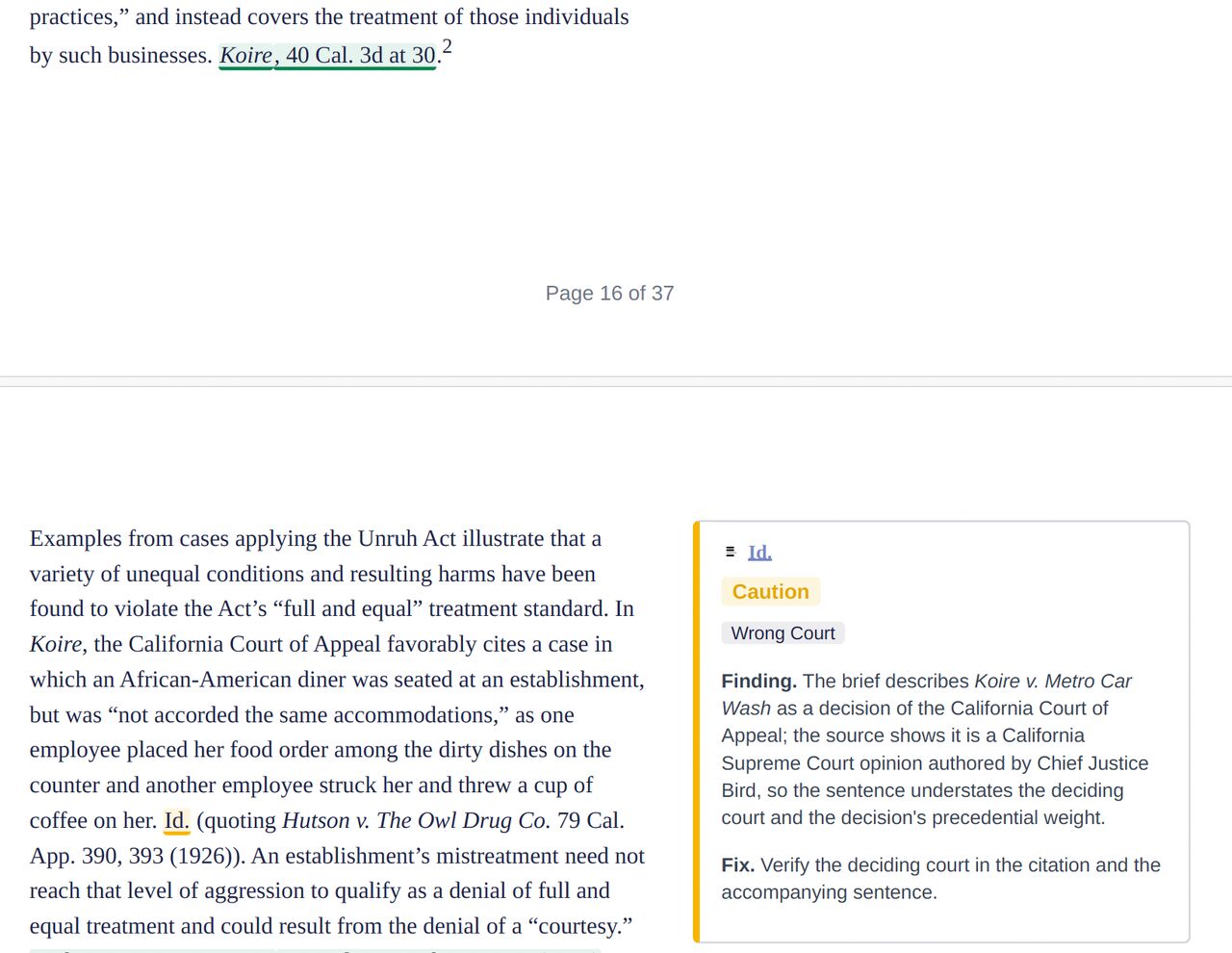
The wrong court
The brief attributes Koire v. Metro Car Wash to the California Court of Appeal. It’s a California Supreme Court decision, authored by Chief Justice Bird, which gives it more precedential weight than the brief lets on.
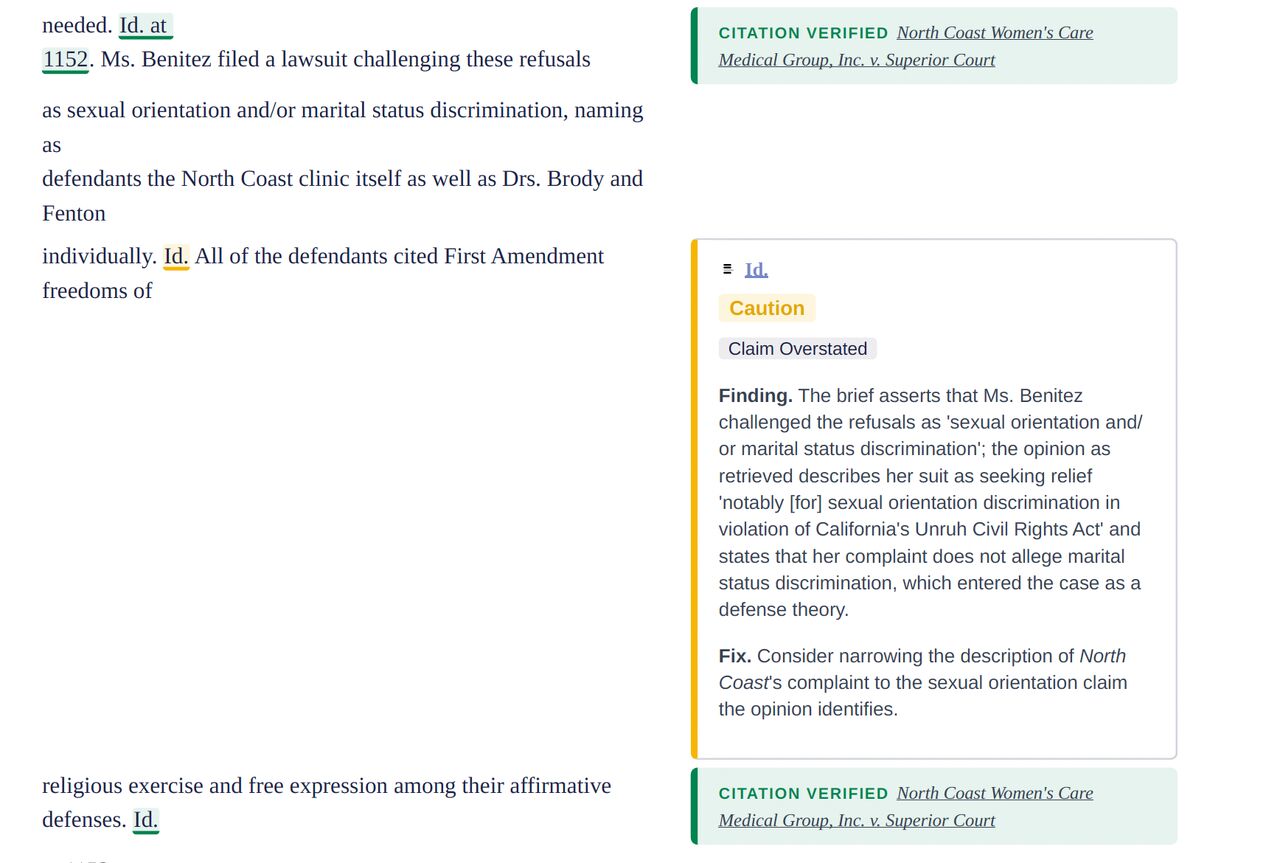
A claim the plaintiff never pleaded
The brief says the North Coast plaintiff challenged her treatment as “sexual orientation and/or marital status discrimination.” But the Supreme Court noted in a footnote that her complaint alleged no marital-status claim. Marital status was the doctors’ explanation for refusing to treat her.
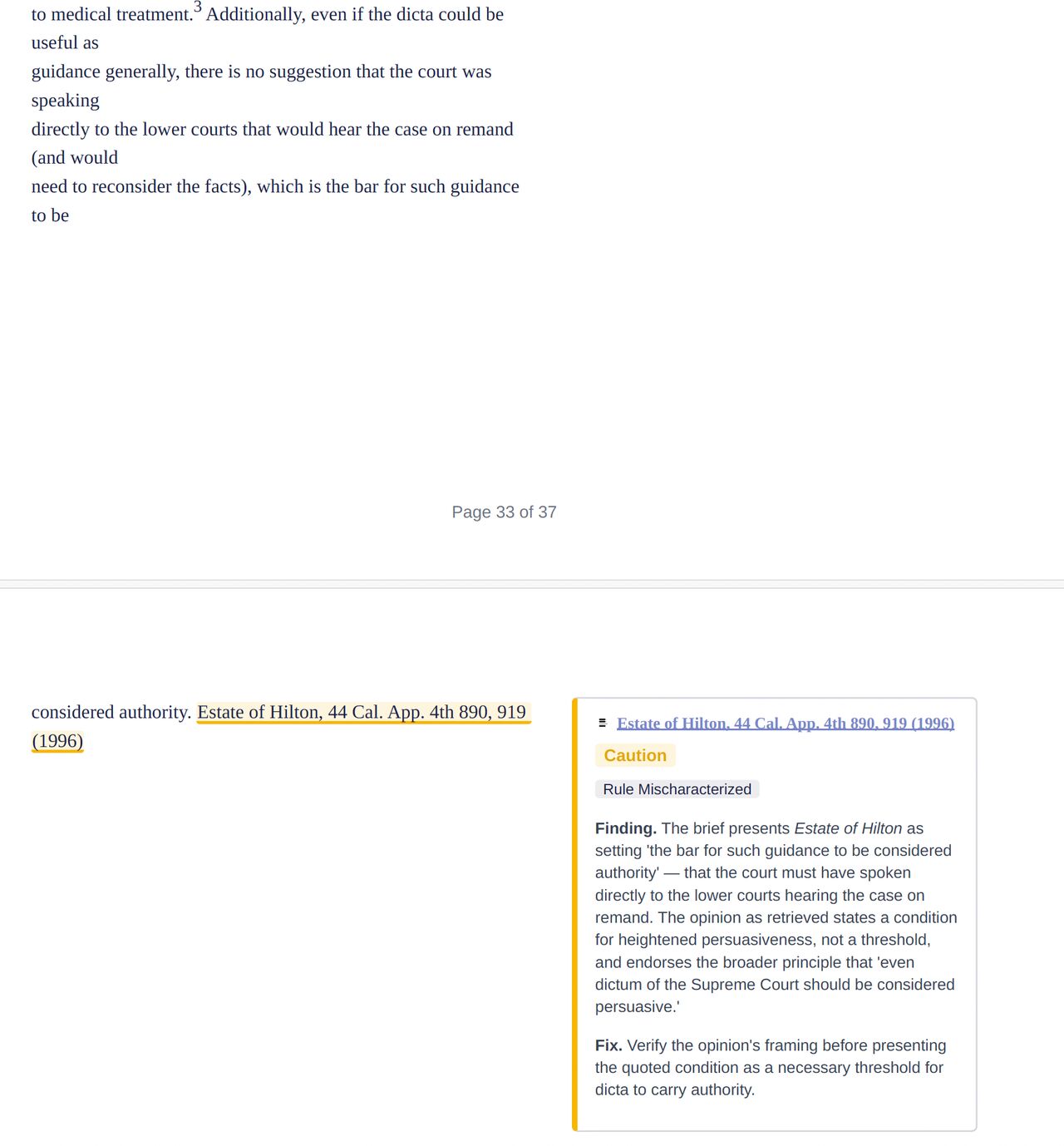
A factor turned into a prerequisite
Under Estate of Hilton, Supreme Court dicta may be highly persuasive when it’s aimed at the lower court on remand. The brief treats that as the floor, as if dicta matters only when the court was speaking directly to the courts on remand.
More than whether the case exists
The brief won, so these slips didn’t change the outcome. But seasoned appellate writers made them long before generative AI, and courts now have new tools to scrutinize briefs. The law doesn’t define “personally verified.” The real question is no longer just whether a case exists. It’s whether the case stands for what the brief says it does.